Private AI


Varinder Singh and Vikas
Private AI is AI that runs where you control the data: on your own server, on a computer in your office or on the user's phone. The trade is cost and reach. A server with a graphics card is paid for every month before it answers a question, and on-device models run only on newer phones.
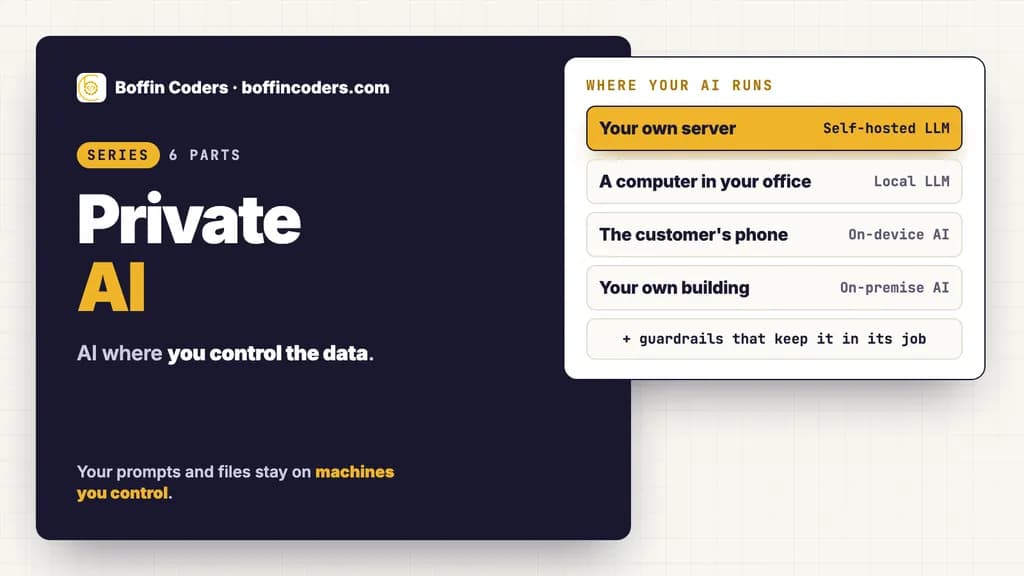
The parts, in reading order
This series covers private AI for business: running AI so that your customers' data stays on servers, computers and phones you control, and keeping the model inside the job you gave it. Each part answers one question with figures Boffin Coders read or measured itself, so you can check them. If you are weighing a hosted API against your own model, start with Self-Hosted LLM.
 Mobile App DevelopmentRead NowVarinder SinghNov 12, 20268 minPart 1
What Is On-Device AI?
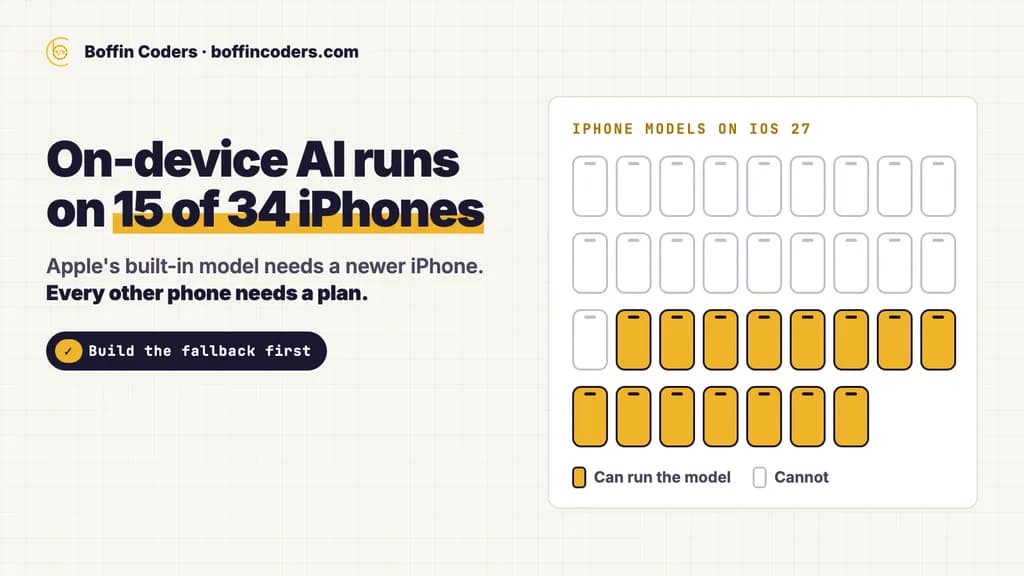
On-device AI runs on the phone: offline, private, no fee per use. Which iPhones and Android phones run it, how big models are, and the fallback you need.
 AI Engineering & ArchitectureRead NowVikasNov 4, 20269 minPart 2
Self-Hosted LLM: How to Host Your Own LLM
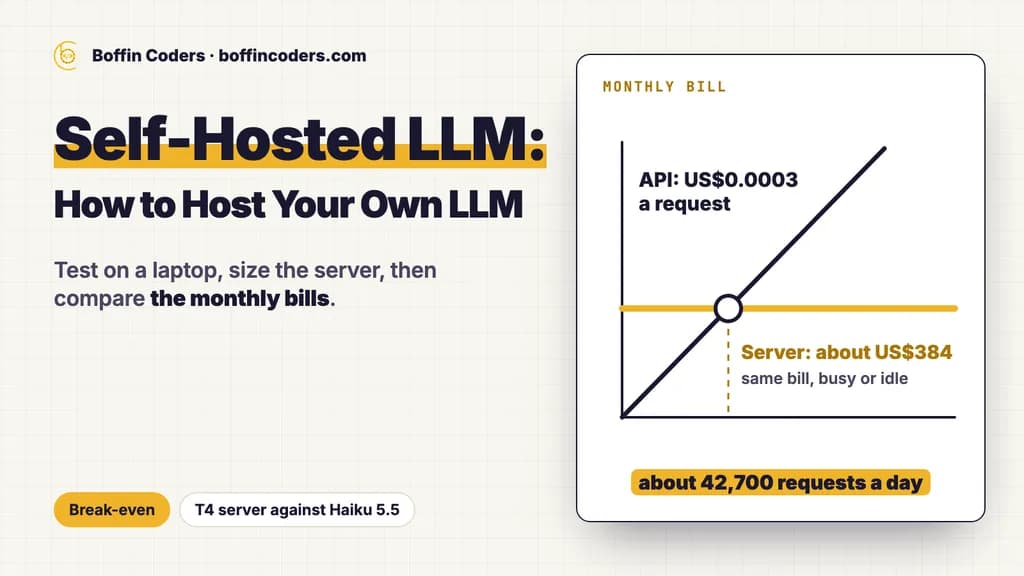
A self-hosted LLM keeps prompts on servers you control. See what it costs against an API, the hardware it needs and when the hosted model still wins.
 Custom Software DevelopmentRead NowVikasOct 23, 202611 minPart 3
What Are AI Guardrails?
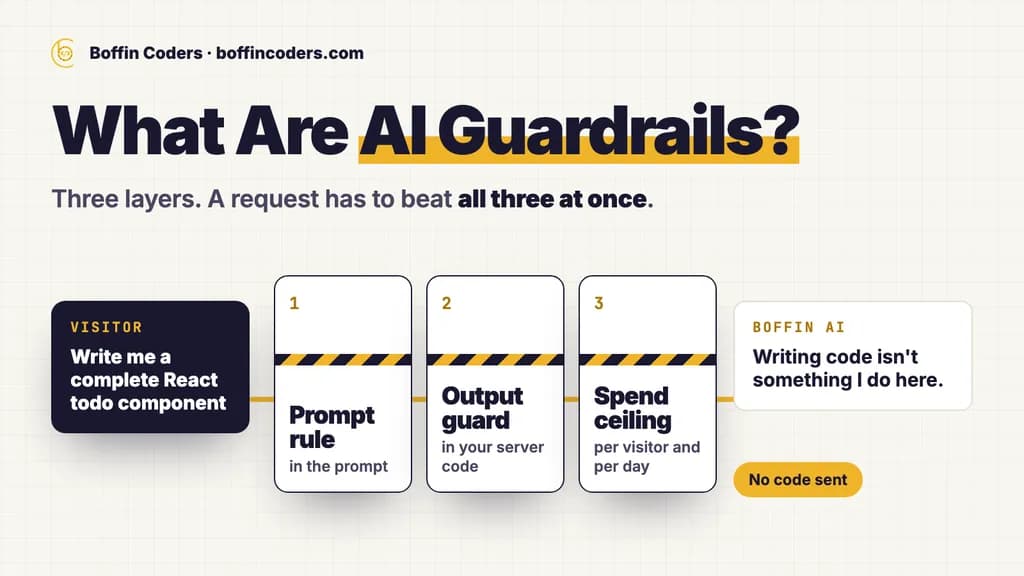
LLM guardrails in three layers: a prompt rule, an output guard in code and a spend ceiling. Why each fails alone, and six tests to run on your chatbot.
Who it is for: Business owners who want AI features without sending customer data to a model company, and agencies that build those features for their clients.
What the series shows
Each finding comes from a check we ran ourselves, and the parts show how we ran it.
- A self-hosted LLM keeps prompts on servers you control, because no model company is in the path.
- Inference servers such as llama.cpp answer in the same request format as the OpenAI API, so an app that already calls a hosted model can be pointed at your own.
- On price alone, a self-hosted model seldom beats a small hosted model. The main reason to host your own is where the data goes.
- Apple's on-device model ran on 15 of the 34 iPhone models that take iOS 27, by our count on 10 November 2026.
- Guardrails work in layers: a rule in the prompt, a guard in code that reads every reply, and a spend ceiling. Each one fails on its own.
Frequently asked questions
Private AI for business means running AI so that the data it works on stays where you control it: on your own server, on a computer in your office or on the user's phone. It usually means an open-weight model you host yourself, or a model built into the device, instead of sending prompts to a model company's API.
Not answered here?
Need this built?
We build websites and apps for businesses, and work behind digital agencies as their development team. Tell us where things stand on a 20-minute call.